Home › Applications › Exhibition and event sites
Transfer Vehicles for Exhibition and Event Sites
Plan passenger movement between car parks, entrances and halls around your event and your route.
Weekly advertising revenue
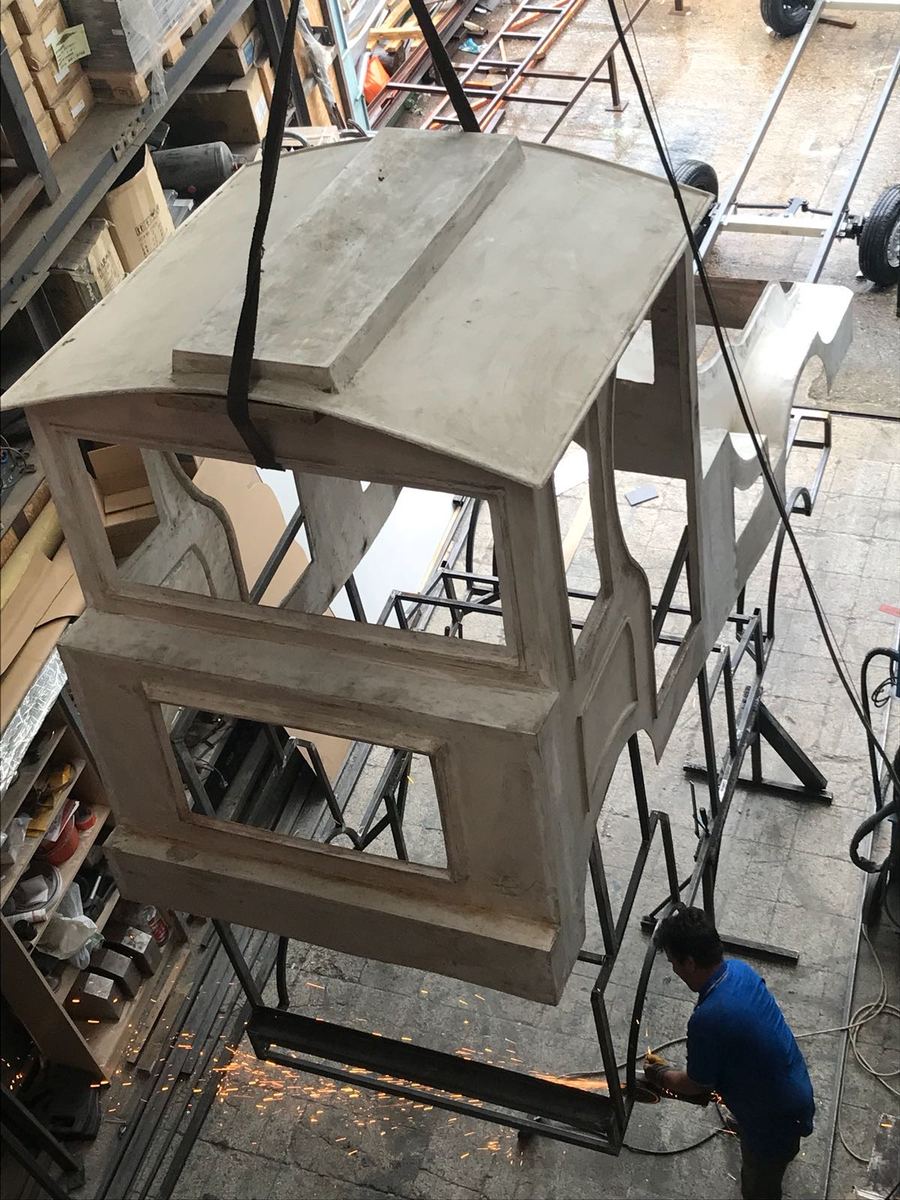
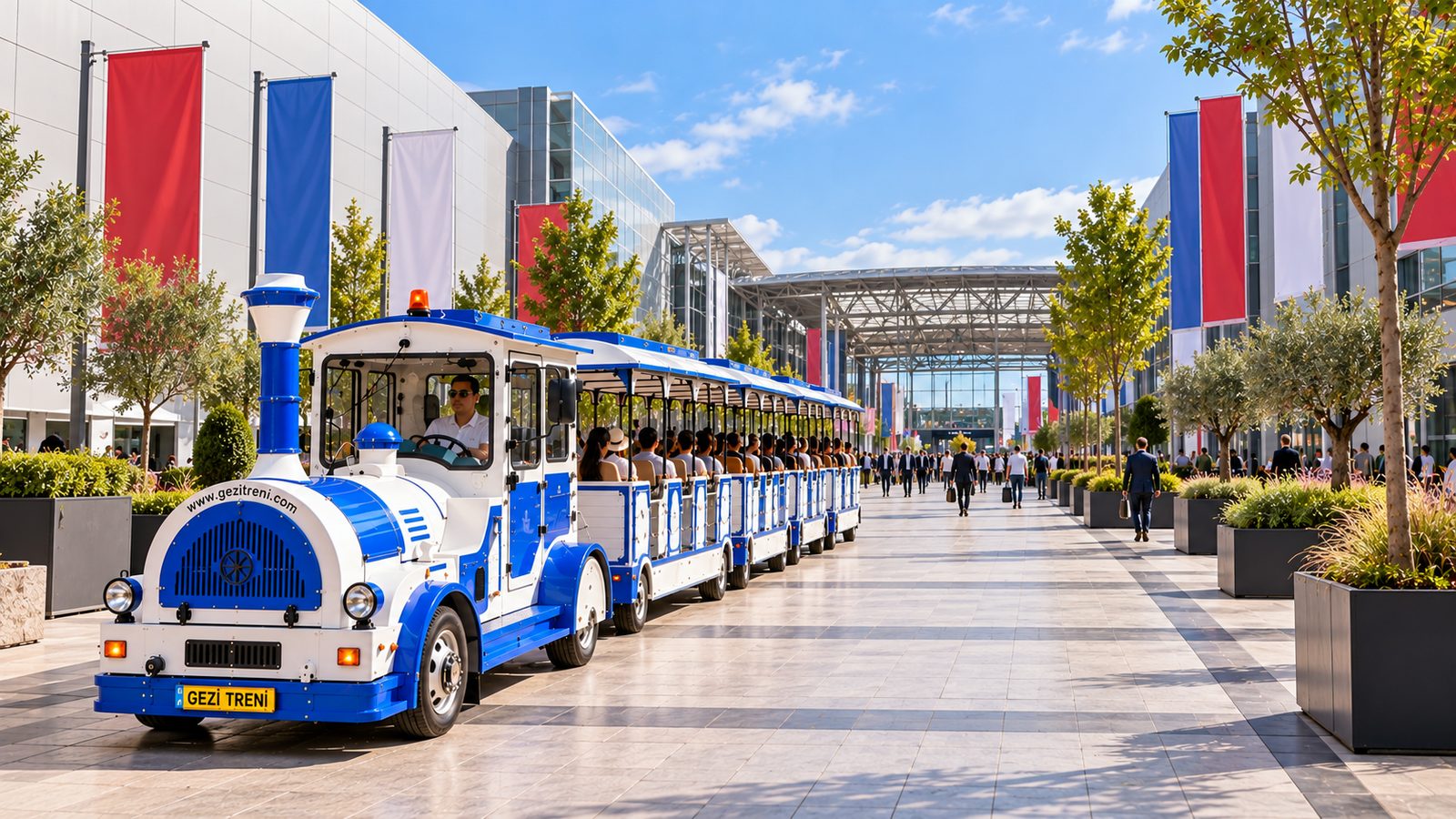
Because the exhibiting companies at a fair change every week, the tourist train offers advertising revenue that renews weekly: the large outer body, rooftop billboard spaces and in-wagon screens can be sold to the participating companies. Their brands travel in plain sight of visitors between the halls and lobbies. Ticket revenue comes in addition. The in-wagon screen option is assessed within the project scope; advertising is planned according to local regulations and permits.
Demand that changes through the day
Opening and closing times, waiting at stops and pedestrian crossings are considered together. A regular service on a permanent site and a short-term festival loop call for different operating plans.
Set-up and rental
Parking and charging areas, the number of vehicles, the driver arrangement and the stop locations are set within the project. For rental requests, the location, dates and operating responsibility are clarified separately.
Shortens the walk from car park to hall
In large fairgrounds and event sites, the distance between car parks, entrance gates and halls tires visitors. A tourist train covers it comfortably, which is especially valuable for older visitors, families with children, visitors with disabilities and exhibitors carrying heavy samples or brochures.
Permanent line or temporary event line
A line that runs all year and a loop for a few days of a fair, festival or concert are planned differently. Rental can be considered for short events and purchase for regular use.
Low speed and safe stops among crowds
Trains run at low speed among pedestrians. Stop locations, pedestrian flow, emergency crossings and cooperation with security staff are settled together in the project.
Choosing a model
Mini is considered for compact areas and narrow passages, Midi for medium-sized events and Maxi for heavy visitor volumes and long lines; Mini carries up to 64, Midi up to 112 and Maxi up to 128 passengers. The electric option stands out for quiet, exhaust-free operation around enclosed halls; the new Western Express adds an eco-friendly, eye-catching look.
Brand, sponsor and event theme
The locomotive and wagons can be dressed in the event’s colours, logo or sponsor identity. The options on the Custom-designed trains page apply to fairs and events too.
Multilingual commentary
At international fairs, the GPS-triggered multilingual commentary option can give visitors hall directions and announcements in their own language. This option is assessed within the project scope.
What do we need for a quotation?
The site plan or approximate line length, the number of stops, passengers to carry at peak hours, event dates and duration, ground and gradient, your preferred engine type, where it can be charged and whether it will be permanent or temporary. With this information the quotation is prepared much faster.
Frequently asked questions
How is a loop created between exhibition halls?
The stop and timetable plan is drawn up from the locations of the halls and car parks, pedestrian density and event hours.
Which model suits a fairground?
Site size, visitor density and passage widths are considered together. Mini is considered for compact, narrow areas, Midi for medium-sized sites and Maxi for busy sites and long lines.
Can it be rented for an event lasting a few days?
Short-term rental can be considered. Location, dates and operating responsibility are settled separately; see the Rental page for details.
Can it be used around enclosed halls?
The electric option produces no exhaust, so it is preferred around enclosed halls and busy pedestrian areas. Details are settled per project.