Home › Applications › Parks and public gardens
Tourist Trains for Parks and Public Gardens
Turn the long distances between entrances, playgrounds, visitor facilities and rest points into part of the visit.
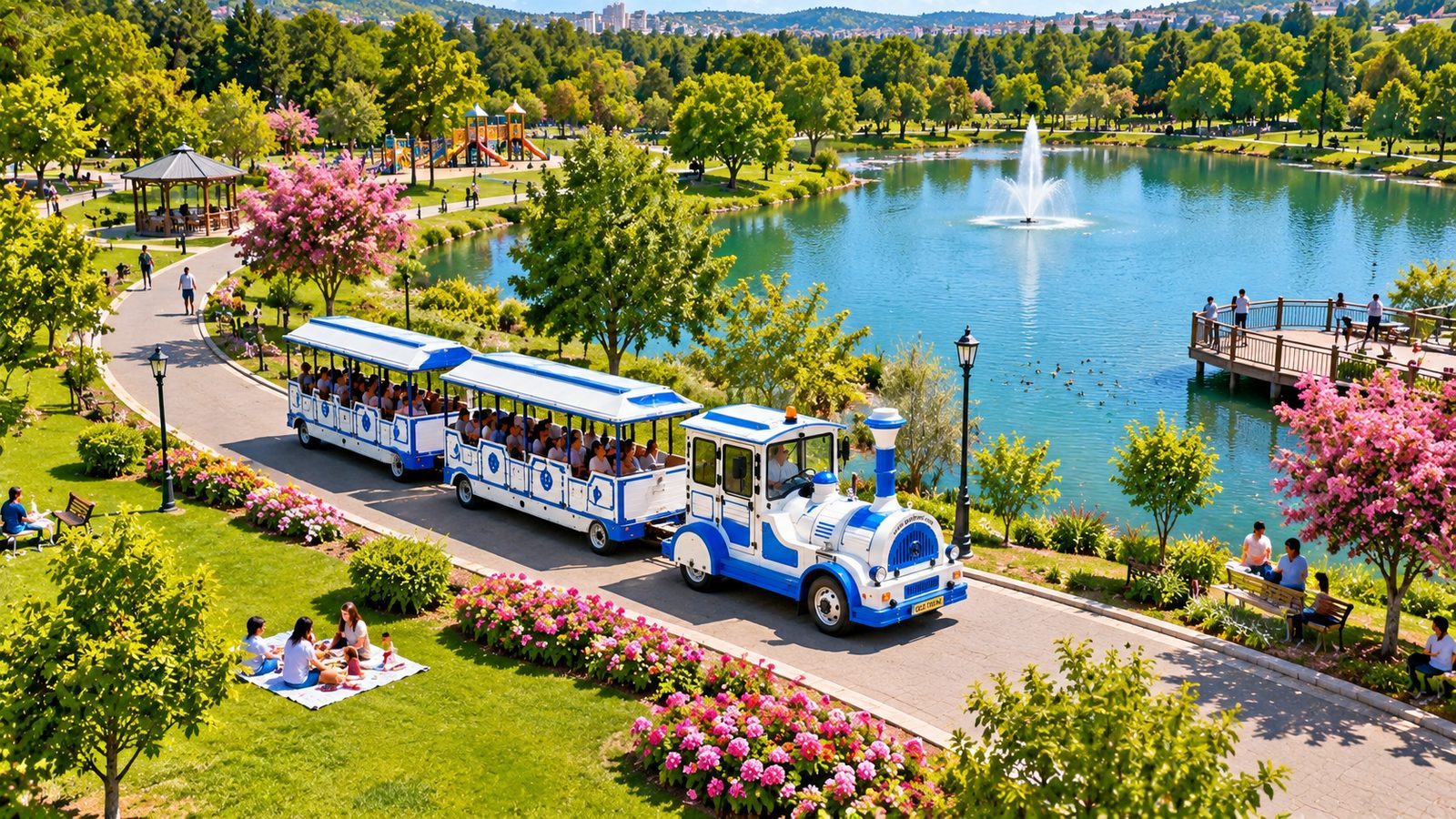
A route is not judged by its length alone
Pedestrian and cycle traffic, turning points, stop locations and the ground surface are considered together. Boarding is planned separately for families, older visitors and passengers who need mobility support.
Sightseeing or loop service?
A sightseeing ride inside a park and a regular shuttle from the car park to the entrance need different operating plans. The vehicle and wagon layout are set by visitor demand and the real ride time.
Why a tourist train for municipalities?
In parks and public gardens, a tourist train gives visitors who find walking difficult a way to get around, and gives families and children an enjoyable experience. For the municipality it means promoting the site and visitor satisfaction. It also helps organise movement inside the park on busy weekends and holidays.
Which model suits?
Mini is considered for small parks with gentle gradients, Midi for medium-sized parks, and Maxi for long routes and high passenger volumes. Mini carries up to 64, Midi up to 112 and Maxi up to 128 passengers. In areas with many pedestrians, the quiet, exhaust-free electric option stands out; the new Western Express is an eco-friendly and eye-catching choice.
Pedestrian and child safety
Because parks have many pedestrians, children and cyclists, routes and stops are planned so as not to disrupt pedestrian flow. The vehicles are limited to a maximum speed of 25 km/h; speed within the park and the stop layout are set according to pedestrian density.
Tenders and rental
For municipal purchases, the technical specification and documentation file are prepared as needed. Besides purchase, short-term, seasonal or annual rental can also be considered.
Advertising and revenue opportunities
The tourist train’s large outer surfaces and its rooftop billboard areas can be used for advertising and announcements. Screens can also be fitted inside the wagons for visual advertising and announcements; this option is assessed within the project scope. Ticket revenue can be earned, and because local businesses can advertise, it also supports the local economy. Advertising is planned according to local regulations and permits.
What do we need for a quotation?
The park plan or approximate route length, the steepest gradient on the route, the number of passengers to carry at once, the engine type you want (electric, diesel or petrol), where the train can be charged, the width and surface of the paths, and the operating season and hours. With this information we can quote much faster.
Frequently asked questions
How do you choose a tourist train for a public park?
We look at passenger needs, the circulation plan, pedestrian density, path width, gradients and stops together.
Can a trackless train use the paths we already have?
Needing no rails does not mean every path is suitable. Ground condition, load-bearing capacity, width, turns and pedestrian movement are assessed separately.
Is an electric tourist train suitable for parks?
Yes. The electric model runs quietly and produces no exhaust fumes. The place where it will be charged is considered together with the route plan.
Can we rent instead of buying as a municipality?
Short-term, seasonal or annual rental can be considered. See the Rental page for details.
Can a vehicle be made to match our park’s theme?
Yes. Colours, themes and figures can be prepared on request; see the Custom-designed trains page.